What Does A High Pass Filter Do

What does a high pass filter do
High-pass filters are also used for AC coupling at the inputs of many audio power amplifiers, for preventing the amplification of DC currents which may harm the amplifier, rob the amplifier of headroom, and generate waste heat at the loudspeakers voice coil.
When should I use high-pass filter audio?
If you are broadcasting or reinforcing sound outside, and even your best windscreen can't keep out the persistent low-frequency rumble from wind noise, then stopping it right at the source may be your best option. Highpass filters are excellent for this application.
What is the difference between low pass and high-pass filter?
Low pass filter: Low pass filter is the type of frequency domain filter that is used for smoothing the image. It attenuates the high frequency components and preserves the low frequency components. High pass filter: High pass filter is the type of frequency domain filter that is used for sharpening the image.
What does a high-pass filter do in Photoshop?
When you sharpen an image, you're increasing the contrast along any edges where there's a change in brightness and texture. If you're working in Photoshop, its High Pass Filter basically finds these edges and highlights them.
What should my high-pass filter be set on my subwoofer?
Recommended Starting Points: Front Component Speakers - High-Pass Filter = 80 Hz (12 db or 24 db Slope) Rear Coaxial Speakers - High-Pass Filter = 80 Hz (12 db or 24 db Slope) Subwoofer(s) - Low-Pass Filter = 80 Hz (12 db or 24 db Slope)
Why are low and high pass filters important?
A high-pass filter effectively cuts out the frequency response of a mic below a certain set point, allowing only the frequencies above this point to “pass” through as the audio signal. High-pass filters remove unwanted and excess low-end energy that otherwise degrades the audio signal.
Does high-pass filter remove noise?
High-pass filters remove low-frequency (slow) noise and pass high-freqency signals. Low-pass filters remove high-frequency noise and thus smooth the data. Band-pass filters allow only certain frequencies and filter everything else out.
What instruments need a high-pass filter?
If the kick drum and bass guitar are getting drowned in your mix, you can use a high-pass filter to shape the low end. You can apply an HPF to other instruments to carve out room in the mix for the kick and bass.
What Hz is best for bass?
BASS AND UPPER BASS (40-80 Hz/Eto E2) For normally tuned bass guitar and upright double bass, note fundamentals extend down to E1, (open E). I would consider bass arbitrarily to be below C2 (65.41 Hz). That is two octaves below middle C. The fundamental of a note is its musical pitch.
What does a high-pass filter sound like?
It's not perfect which is why you should always try to avoid plosives. From the beginning.
When would you use a low-pass filter?
Reduce clashing between similar sounding instruments. By design, filtering is best used to make space for sounds. In the case of a low pass filter, this means selectively removing high frequencies so upper range instruments can be heard.
What is a low-pass filter used for?
Low pass filters are used to filter noise from a circuit. 'Noise' is a high frequency signal. When passed through a low pass filter most of the noise is removed and a clear sound is produced. high-cut or treble cut filters.
What do you use high pass for?
A high pass filter is a simple, effective type of EQ curve, one that scoops out unwanted low frequencies from any audio source. They are fantastic when used correctly to clean up woofy signals and tighten up arrangements.
How do I make my photos sharper?
You might have a bad lens or a lens that is not capable of producing sharp photos. ...
- Set the Right ISO.
- Use the Hand-Holding Rule.
- Choose Your Camera Mode Wisely.
- Pick a Fast Enough Shutter Speed.
- Use High ISO in Dark Environments.
- Enable Auto ISO.
- Hold Your Camera Steady.
- Focus Carefully on Your Subject.
How can I increase sharpness of a photo?
How Can We Manage It?
- Shutter Speed. Since the root cause is closely related to subject motion, one of the solutions is also the same: increasing the shutter speed.
- Vibration Compensation. ...
- Multiple Shots. ...
- Tripod and Bracing. ...
- Post-Processing. ...
- Narrow Apertures. ...
- Focus Stacking.
What frequency should a car subwoofer be set at?
Subwoofers: 70-80 Hz (low pass), the most essential purpose of a subwoofer crossover is to block midrange sounds. Car main speakers: 50-60 Hz, the most critical element in main speaker crossovers is to block low-end bass (frequencies 80 Hz and below) 2-way speakers: 3-3.5 kHz (high pass)
Is 120hz good for subwoofer?
The frequencies you hear between 80hz and 120hz sound "better" to you when they're playing at you from the position of the subwoofer, and they sound "worse" to you when they're played at you from the position of the speakers.
How do I stop my subwoofer from bottoming out?
The cure for this is a new voice coil, a delicate and in most cases, uneconomical procedure on most home and car audio woofers. Some professional units have field replaceable cones or baskets. Some woofers have a "bumped back" magnet which reduces the likelihood of hard bottoming.
Is high-pass filter necessary?
Using a high pass filter can prevent a compressor from engaging prematurely based on low-frequency energy. Without a high pass filter, too much low-frequency content can cause an amplifier to work unnecessarily hard to produce frequencies that will not even be heard through the speakers.
Why higher order filters are better?
High-order filters are used because they have the ability to roll off gain after the bandwidth at a sharper rate than low-order filters. The attenuation of a filter above the bandwidth grows proportionally to the number of poles. When rapid attenuation is required, higher-order filters are often employed.
10 What does a high pass filter do Images
High Pass Filter Passive RC Filter Tutorial Electronic circuit

How to Use the High Pass Filter in Photoshop Sharpen Photos High

Using the High Pass Filter in Photoshop Inspire Me Digital

Low and High Pass Filter circuit High pass Circuit diagram Circuit

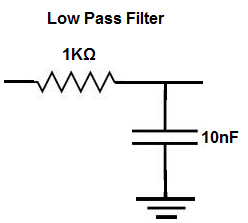
Low Pass Filter Passive RC Filter Tutorial Filters Engineering

Pin on Projects to Try
Kzztve itt Hangszor

A band pass filter also known as a BPF or passband filter is a device

Photoshop CS5 Skin Smoothing the fast way Using the High Pass Filter

Post a Comment for "What Does A High Pass Filter Do"